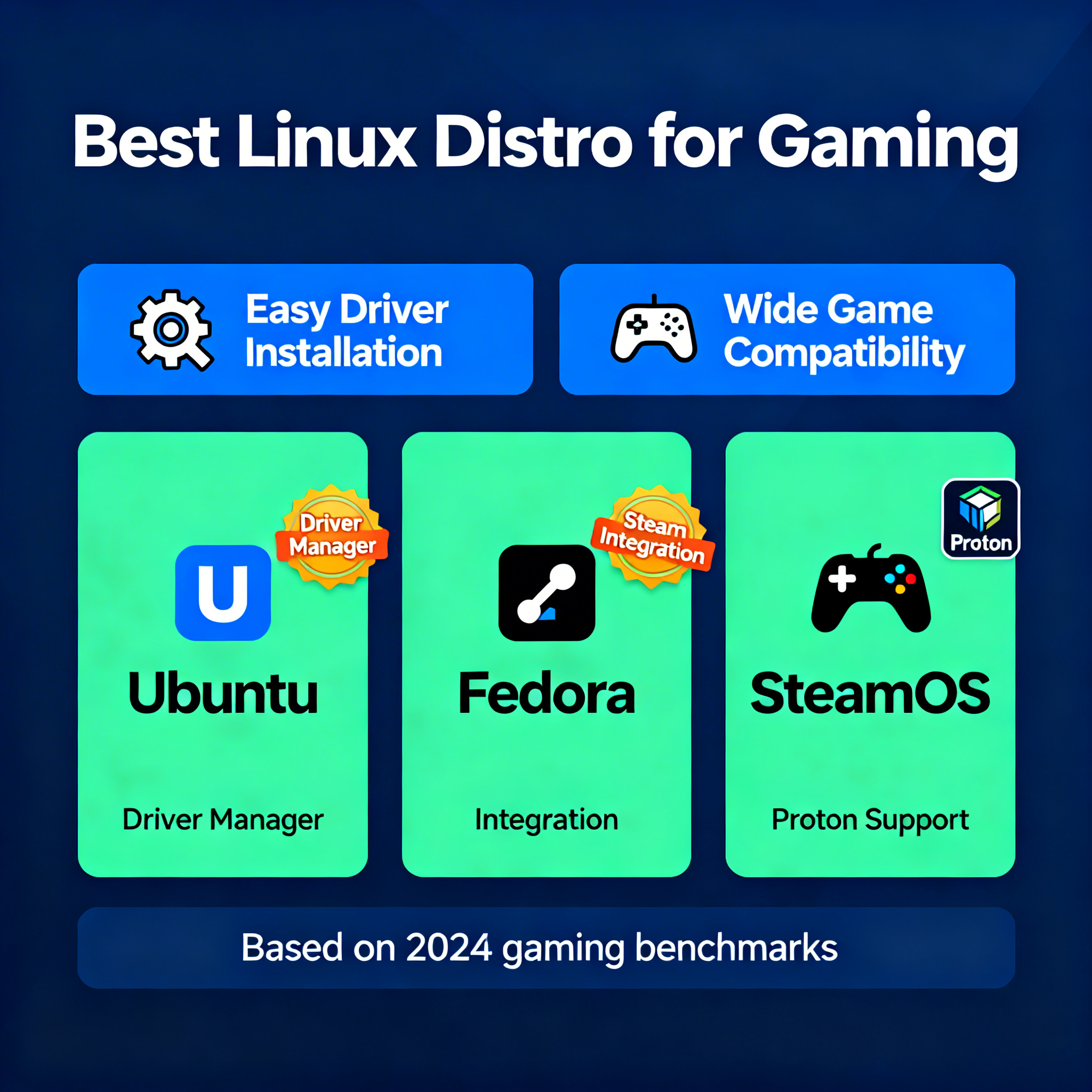
Choosing the best Linux distro for gaming transforms your standard computer into a high-performance entertainment system. You bypass bloated background processes and take complete control over your hardware resources. We explore the top operating systems designed specifically to run your favorite titles at maximum frame rates.
The Evolution Of Open Source Entertainment
Playing major commercial releases on alternative operating systems previously required immense technical knowledge. You spent hours configuring prefixes and hunting down missing dependencies just to launch a title. Modern compatibility layers eliminate these frustrating hurdles completely.
Developers treat open-source platforms as primary targets rather than afterthoughts. Valve poured massive resources into ensuring their entire catalog runs natively or through efficient translation layers. You benefit directly from this massive corporate investment.
You no longer compromise on performance when leaving traditional operating systems behind. Many titles actually produce higher frame rates thanks to lighter background resource usage. The operating system stays out of your way and dedicates processing power directly to your entertainment.
Understanding The Proton Compatibility Layer
Proton acts as a real-time translator between proprietary game engines and your open-source operating system. Valve developed this tool by heavily modifying existing translation projects and integrating modern graphics interfaces. You simply click the install button on Steam and the software handles the complex translation automatically.
The software intercepts rendering calls and translates them instantly. This process happens so fast that you never notice any input lag or performance drops during intense matches. You run thousands of exclusive titles without waiting for developers to create native ports.
Community members maintain a massive database tracking exactly how well specific titles run. You check this database before buying a new release to ensure complete compatibility. The community provides specific launch options to fix minor visual glitches or audio issues.
Valve And The Steam Deck Influence
The release of the Steam Deck pushed the entire open-source ecosystem forward by several years. Valve needed a reliable, controller-friendly operating system to power their portable hardware. They built SteamOS to provide a console-like experience that anyone can navigate easily.
Hardware manufacturers noticed the massive success of this device and began supporting open-source drivers properly. You see faster updates for graphics cards and better support for wireless controllers. The portable market single-handedly forced the industry to take alternative operating systems seriously.
Other developers now copy this successful formula to create their own focused distributions. You install these specialized operating systems on standard desktop computers to replicate the console experience. The line between traditional computers and dedicated gaming consoles continues to blur.
Bazzite The Premium Console Experience
Bazzite quickly became the top recommendation for users who want a flawless out-of-the-box experience. The development team built this operating system directly on top of Fedora to ensure incredible stability. You boot up your computer and immediately enter a customized interface ready for your controller.
The system includes proprietary drivers, multimedia codecs, and essential tools by default. You skip the tedious setup phase entirely and start downloading your library within minutes. The developers even include specialized schedulers to prioritize your active application.
You run Bazzite on standard desktop towers, living room media centers, or alternative handheld devices. The installer automatically detects your hardware and applies the correct performance profiles. You get a tailored experience regardless of your specific hardware configuration.
Immutable Updates Explained
Bazzite uses an immutable file system to protect your core operating system from accidental damage. You cannot modify the core system files, and regular software updates arrive as complete images. This approach prevents broken updates from ruining your weekend entertainment plans.
You install your applications through containers to keep them separate from the core system. If a specific application crashes, it never takes the rest of your system down with it. You reboot your computer to apply system updates instantly without waiting for long configuration processes.
Nobara Project By GloriousEggroll
The creator of the legendary Proton custom compatibility layer develops the Nobara Project. This distribution targets users who want maximum performance without compiling custom software themselves. You get an operating system heavily patched specifically for entertainment and content creation.
The project takes the stable Fedora base and injects dozens of specific kernel patches. You experience lower input latency and better memory management during heavy workloads. The developer removes complex enterprise software and replaces it with tools you actually need.
You receive prompt updates for graphics drivers and compatibility layers directly through the custom repositories. The welcome screen guides you through installing proprietary media codecs and popular communication apps. You spend less time configuring and more time playing.
Pop OS The Nvidia Powerhouse
System76 develops Pop OS to run their custom hardware but provides the software free for everyone. You download a specific installation image that includes proprietary Nvidia drivers already configured. This saves you from staring at black screens and troubleshooting driver conflicts.
The operating system features a custom power management tool accessible directly from the top panel. You switch between battery saver, balanced, and high-performance modes with a single click. Laptop users easily toggle between their integrated graphics and dedicated graphics cards.
The default interface relies heavily on keyboard navigation and automatic window tiling. You organize your communication apps, web browsers, and launchers without dragging windows manually. This efficient workflow keeps your desktop clean and organized.
Garuda Linux The Visual Masterpiece
Garuda Linux commands attention with its incredibly aggressive styling and neon visual themes. The developers built this system on top of Arch Linux to provide absolute bleeding-edge software updates. You receive the newest graphics drivers the moment developers release them to the public.
The Dragonized edition comes stuffed with every emulator and launcher you could possibly need. You launch the setup assistant to download additional tools tailored to your specific hardware. The system utilizes a specialized kernel to ensure your interface remains responsive under heavy load.
Arch Base With Safety Nets
Running bleeding-edge software usually introduces the risk of unexpected system crashes. Garuda solves this problem by utilizing automatic snapshots before every major change. The system creates a backup state every single time you install new software or update your packages.
You simply reboot and select a previous snapshot from the boot menu if an update breaks your machine. The system restores your computer to perfect working order in seconds. This safety net gives you the confidence to run the absolute newest software available.
CachyOS The Performance Innovator
CachyOS targets hardware enthusiasts who want to squeeze every possible frame out of their expensive components. The development team compiles their software packages specifically for modern processor architectures. You gain measurable performance increases simply because the software understands your modern processor better.
The distribution offers multiple custom kernels optimized for different types of workloads. You select advanced schedulers that prioritize task completion speed over power efficiency. The system aggressively manages background processes to keep your resources focused on your primary task.
You need basic terminal knowledge to get the most out of this highly tuned operating system. The community provides excellent documentation, but the learning curve remains higher than beginner distributions. The raw performance numbers make the extra effort completely worthwhile.
Fedora The Silent Champion
Many users overlook standard Fedora, assuming developers built it purely for enterprise programming. However, Fedora ships extremely modern packages and adopts new technologies faster than almost anyone else. You get an incredibly stable foundation that still supports the newest hardware releases.
The developers pushed new display server technologies early, resulting in a completely tear-free visual experience. You utilize variable refresh rate monitors and multiple displays without encountering the stuttering issues found on older systems. The stock interface stays completely out of your way.
You must manually enable third-party repositories to install proprietary graphics drivers and media codecs. The process requires typing a few simple commands, but the official documentation walks you through every step. Once configured, you possess an incredibly reliable and fast machine.
Linux Mint The Familiar Ground
Linux Mint provides the absolute best landing spot for users leaving traditional operating systems for the first time. The interface uses a familiar bottom taskbar and a traditional start menu layout. You understand how to navigate the system instantly without learning new workflows.
The system relies on an older, incredibly stable base rather than chasing the newest updates. Your computer rarely experiences sudden changes or unexpected bugs during daily use. You install your launchers and let the compatibility layers handle the heavy lifting.
You sacrifice a few frames per second by using slightly older graphics drivers and system kernels. However, you gain a machine that boots up reliably every single day without requiring maintenance. Many users gladly make this trade-off for absolute peace of mind.
Essential Software For Your Setup
You need a few core applications to manage your massive library effectively. These tools centralize your collection and handle the complicated background configurations for you. You install them directly from your distribution software center.
- Steam provides the most seamless experience with built-in compatibility layers
- Lutris organizes titles from multiple storefronts into one unified library
- Heroic Launcher handles your alternative digital storefronts natively
- MangoHud displays your frame rate, temperatures, and hardware usage
- Discord provides voice communication and community features
- OBS Studio records your screen and handles live streaming
Managing Alternative Launchers
You likely own libraries across several different digital storefronts outside of Steam. Installing the official proprietary launchers often causes headaches because developers rarely support alternative operating systems. Community-built tools solve this problem elegantly.
The Heroic Launcher connects directly to your alternative accounts securely. You download your purchases natively and apply custom compatibility layers per title. The interface looks modern and runs significantly faster than the official proprietary counterparts.
Lutris uses community-written scripts to automate the installation of older or highly complex titles. You search for your desired software, click install, and the script configures the exact translation environment needed. This tool saves you from manually configuring settings and tracking down missing libraries.
Performance Monitoring Tools
You want to verify that your hardware performs optimally after setting up your new operating system. Traditional monitoring software rarely works outside of proprietary environments. Open-source developers created powerful alternatives that overlay directly onto your screen.
MangoHud provides incredibly detailed telemetry covering your processor usage, graphics card temperatures, and frame pacing. You customize exactly what information appears on screen using a simple configuration file. You trigger the overlay with a keyboard shortcut whenever you need to check your system health.
CoreCtrl gives you graphical control over your processor and graphics card power limits. You create custom fan curves to keep your components cool during intense matches. You apply slight overclocks or undervolt your hardware directly from this clean interface.
Dealing With Anti Cheat Software
Multiplayer titles utilizing aggressive monitoring systems remain the final barrier for open-source adoption. Many competitive shooters require core-level access to monitor your entire computer for malicious software. Open-source operating systems fundamentally block this invasive level of access for your security.
Developers must explicitly enable support for alternative operating systems in their vendor dashboards. Many studios refuse to flip this simple switch due to perceived support costs or unfounded security fears. You completely lose access to certain popular multiplayer titles because of these corporate decisions.
You must check community databases to verify multiplayer compatibility before purchasing new releases. The situation improves every month as more studios realize the growing market share they currently ignore. Single-player and cooperative titles almost always run perfectly without these invasive restrictions.
Hardware Compatibility Concerns
Your specific hardware choices directly impact your experience on these alternative operating systems. AMD graphics cards provide the absolute best experience because the company builds their drivers directly into the core system. You plug the card in and it works perfectly with maximum performance immediately.
Nvidia requires proprietary drivers that occasionally conflict with major system updates. You must use distributions that handle these drivers for you to avoid frustrating graphical glitches. The situation improves constantly, but AMD remains the universally recommended choice for these setups.
Specialized peripherals often lack official configuration software outside of traditional operating systems. You rely on community-built tools to control your keyboard lighting and mouse sensitivity settings. These community tools frequently support more devices and use fewer system resources than the official bloatware.
The Future Of Desktop Entertainment
The landscape of digital entertainment shifts rapidly toward hardware independence. You no longer need to accept aggressive telemetry and forced updates just to play your favorite releases. The community builds better, faster, and more secure tools every single day.
You take ownership of your computer when you switch to these specialized operating systems. You decide exactly how your resources function and what software runs in the background. Your hardware finally serves you instead of serving a massive corporate entity.
“Open source compatibility layers did more for digital preservation in five years than the rest of the industry did in two decades.”
You experiment with different distributions until you find the exact balance of performance and stability you desire. The perfect setup exists for your specific hardware combination. You just need to flash a flash drive and take the first step toward a better experience.