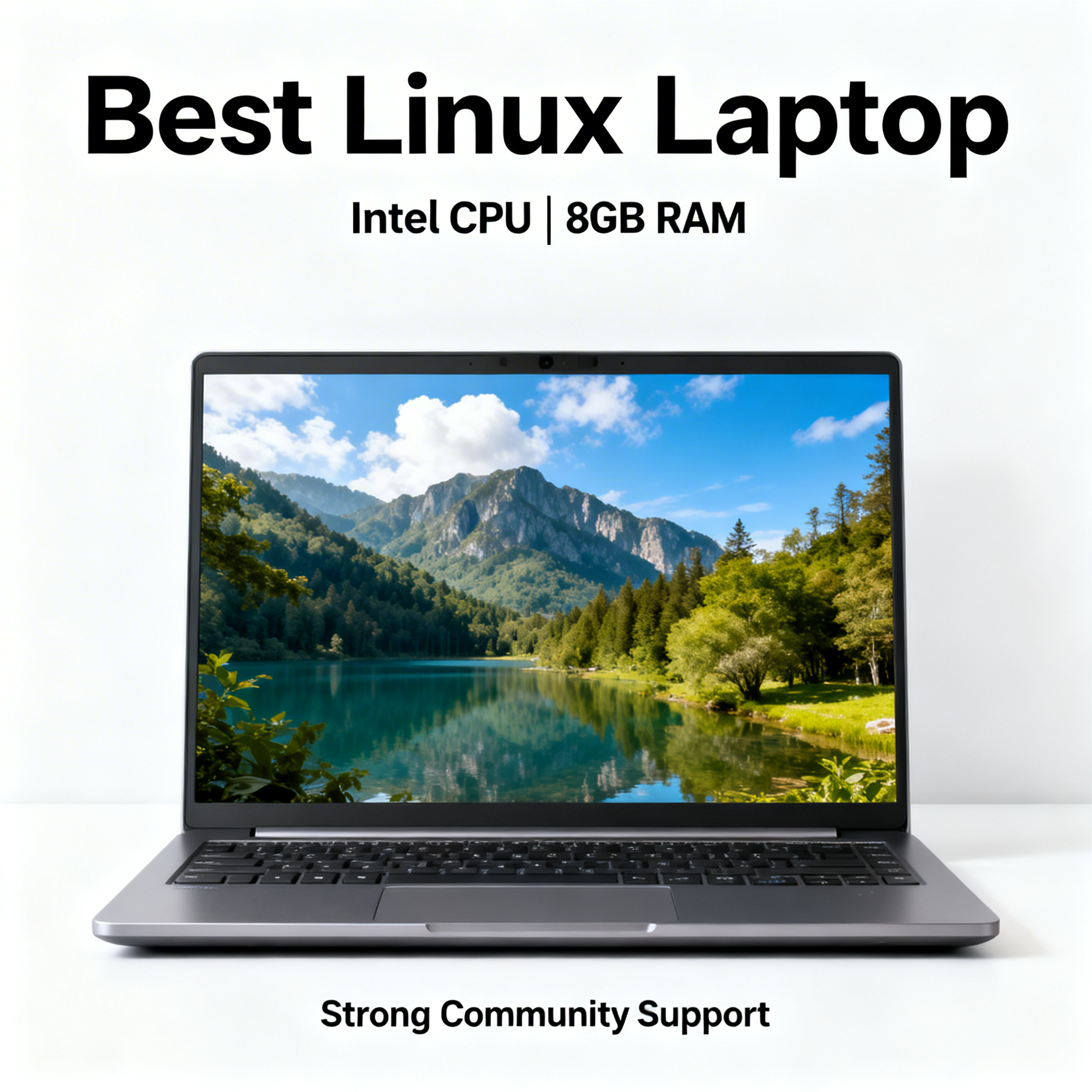
Finding the best laptop for linux requires careful consideration of hardware compatibility and driver support. You want a machine that recognizes your wireless card, manages your battery efficiently, and powers your displays without manual configuration. This guide helps students and system administrators select the perfect mobile workstation for their open-source projects.
Why Hardware Compatibility Matters
Operating systems communicate with physical components through specific software drivers written by hardware manufacturers. Proprietary manufacturers sometimes refuse to release open-source versions of their drivers to the public. This refusal forces community developers to reverse-engineer complex hardware protocols just to make basic features work.
You avoid these frustrating technical roadblocks by purchasing hardware specifically tested for open-source environments. A certified machine guarantees that your touchpad gestures, screen brightness controls, and sleep states function perfectly out of the box. You spend your time actually writing code instead of troubleshooting obscure kernel panic errors on internet forums.
The Advantage Of Pre-Installed Systems
Buying a computer with your preferred operating system already installed provides the ultimate peace of mind. You support companies that actively contribute financial resources and programming hours back to the open-source community. These manufacturers build specialized firmware tools to distribute hardware updates securely through standard software repositories.
Installing alternative operating systems on traditional retail laptops often voids your official software support warranty. Manufacturers simply tell you to reinstall their proprietary operating system before they agree to help you. Open-source hardware vendors provide dedicated technical support teams who actually understand terminal commands and system architecture.
System76 The Dedicated Manufacturer
System76 operates out of Colorado and builds computers explicitly designed for alternative operating systems. They develop their own highly optimized distribution called Pop OS to ensure absolute hardware synergy. You receive a machine tested rigorously to handle demanding programming workloads and complex system administration tasks.
The Lemur Pro serves as their ultimate lightweight option for students carrying a computer across campus all day. It provides exceptional battery life and features an incredible keyboard perfect for typing long scripts. You connect multiple external monitors easily when you return to your dorm room or office desk.
Users requiring massive processing power often choose the larger Oryx Pro mobile workstation. This machine includes dedicated graphics processors to accelerate machine learning models and handle complex video rendering. You compile massive codebases in seconds using its advanced thermal cooling system.
Lenovo ThinkPad The Industry Workhorse
Enterprise developers universally respect the Lenovo ThinkPad series for its legendary durability and exceptional typing experience. Lenovo explicitly certifies many of their top models for use with popular open-source distributions. You download official firmware updates directly through your terminal without touching a proprietary executable file.
The ThinkPad X1 Carbon represents the pinnacle of premium business laptops for serious administrators. It utilizes carbon fiber materials to keep the chassis incredibly light while maintaining military-grade physical durability. You carry this machine safely in your backpack without worrying about screen flex or damaged hinges.
Students on a tighter budget find incredible value in the ThinkPad T series or E series laptops. These machines offer slightly thicker profiles but deliver the exact same legendary keyboard and rugged reliability. You upgrade the memory and storage drives yourself easily using a standard Phillips screwdriver.
Framework Laptops The Repairable Future
The Framework laptop fundamentally changes how you think about owning and maintaining portable computer hardware. They design their machines completely around user repairability and modular component upgrades. You replace your own screen, battery, or keyboard in minutes using the single tool provided in the box.
You customize your exact port layout using tiny expansion cards that slide directly into the laptop chassis. You swap an HDMI port for an extra USB-C port instantly depending on what you need that specific day. This flexibility saves you from carrying a bag full of easily lost dongles and adapters.
The company offers official support for several major open-source distributions and provides clear installation guides. You purchase a do-it-yourself edition that arrives completely disassembled to save money and learn about computer hardware. You literally build your own machine before installing your preferred operating system on it.
Dell XPS The Premium Mainstream Option
Dell pioneered the concept of shipping premium consumer laptops with alternative operating systems through their Project Sputnik initiative. The Dell XPS Developer Edition provides absolute top-tier aesthetics for users who refuse to compromise on design. You get a stunning screen featuring impossibly thin bezels wrapped in a rigid aluminum chassis.
The company ensures every internal component features native kernel support before shipping the device. You enjoy excellent power management profiles that keep the fans quiet during standard web browsing and document editing. The massive glass trackpad recognizes complex multi-finger gestures perfectly without any manual configuration.
You pay a significant premium for the XPS brand name and its striking visual appearance. Students must weigh whether the beautiful design justifies the higher price tag compared to functional business machines. However, it remains the ultimate status symbol for developers who want a machine that looks as good as it performs.
Essential Components For Programming
Your processor determines how quickly your machine compiles code and executes complex local server environments. You want a modern processor featuring multiple physical cores to handle heavy multitasking efficiently. Modern processors handle running multiple virtual machines simultaneously without slowing down your primary workspace.
System memory dictates how many applications and browser tabs you keep open before the computer starts caching data to your hard drive. You absolutely need a minimum of sixteen gigabytes of RAM for any serious development work today. Buying a machine with thirty-two gigabytes ensures your laptop remains capable for the next five to seven years.
Solid-state drives completely replaced mechanical hard drives in modern portable computers. You require at least five hundred gigabytes of fast NVMe storage to hold your dual-boot setups and project files securely. You always verify whether the manufacturer solders the storage drive to the motherboard or allows you to upgrade it later.
Graphics Cards And Open Source Drivers
Choosing the right graphics processor determines how smoothly your external displays and graphical applications function. AMD integrates their open-source graphics drivers directly into the core system kernel for absolute plug-and-play simplicity. You simply turn on an AMD-powered machine and your graphical interface works flawlessly immediately.
Nvidia requires users to install proprietary software packages to utilize their graphics cards properly. Most modern distributions provide simple graphical tools to download and configure these specific drivers for you. You select Nvidia only if you specifically need their proprietary processing cores for machine learning or heavy video production.
Many students only need the integrated graphics processing units built directly into their main computer processors. Integrated graphics consume significantly less battery power and generate much less heat than dedicated graphics chips. You rely on integrated graphics safely for web development, system administration, and basic academic coursework.
- AMD graphics provide perfect driver integration natively
- Nvidia graphics require manual proprietary driver installation
- Integrated graphics offer the best battery efficiency
- Dedicated graphics accelerate complex mathematical computations
Battery Life And Power Management
Alternative operating systems historically struggled with aggressive power management compared to their proprietary counterparts. Community developers recently introduced excellent software tools that manage processor frequencies dynamically to save battery power. You install these utilities to stretch your laptop battery through a full day of university lectures.
You monitor your active background processes to ensure rogue applications do not drain your battery unexpectedly. You adjust your screen brightness and turn off your keyboard backlight to maximize your time away from a wall outlet. Small adjustments to your daily habits extend your battery life significantly during long travel days.
Display Quality For Daily Operations
You spend hours staring at your screen reviewing lines of code and reading technical documentation. You need a display featuring excellent text clarity and a matte finish to reduce harsh overhead glare. A standard high-definition resolution works perfectly for smaller screens, but larger displays require higher pixel densities.
Many developers prefer a taller screen aspect ratio that displays more lines of code vertically. A taller screen prevents you from constantly scrolling up and down while reading complex configuration files. You test different screen ratios in a retail store to see which format feels most natural to your eyes.
Keyboard And Trackpad Ergonomics
The keyboard serves as your primary physical interface with the operating system and your development environment. You want deep key travel and satisfying tactile feedback to prevent typing fatigue during long programming sessions. A poorly designed keyboard frustrates you quickly and introduces unnecessary typos into your administrative scripts.
Your trackpad needs a smooth glass surface that tracks your finger movements with absolute precision. You configure complex swipe gestures in your operating system settings to switch between virtual workspaces instantly. A reliable pointing device keeps your hands on the laptop and away from a clunky external mouse.
Exploring Budget Friendly Alternatives
You do not need to spend thousands of dollars to secure a highly capable open-source machine. The used market offers incredible deals on corporate laptops recently retired from active enterprise duty. You purchase a refurbished business machine from three years ago and enjoy performance that easily handles modern development tasks.
You completely wipe the old proprietary operating system and install a lightweight distribution designed for older hardware. Your alternative operating system breathes new life into these inexpensive machines and makes them feel incredibly responsive. This budget-friendly approach allows students to build personal home server labs using inexpensive secondary laptops.
Running Virtual Machines Locally
Sometimes your university coursework requires you to run highly specific proprietary software temporarily. You utilize virtualization software to run these required operating systems inside a secure window on your main desktop. You pass hardware resources directly through to the virtual environment to ensure the proprietary applications run smoothly.
Your laptop needs extra system memory and a processor featuring hardware virtualization support to execute this task properly. You allocate specific processor cores strictly to the virtual machine while keeping your host system responsive. You simply delete the virtual file when your academic semester ends to instantly reclaim your massive storage space.
Testing Hardware With Live Media
You always verify hardware compatibility yourself before permanently altering a new laptop drive. You create a bootable flash drive containing your preferred operating system and start the computer directly from it. This live environment runs entirely in your system memory without touching the files stored on your internal hard drive.
You connect to your wireless network, play an audio file, and test your function keys while inside this temporary environment. You adjust your screen brightness and close the laptop lid to verify the system enters sleep mode correctly. You proceed with the full installation process only after confirming every physical component operates perfectly.
Supporting The Community Ecosystem
Purchasing hardware from dedicated open-source vendors creates a positive financial feedback loop for the entire community. These specialized companies hire independent developers to fix upstream bugs and improve power management protocols for everyone. Your purchasing decision directly funds the ongoing development of the software you use daily.
You participate in community hardware databases by submitting reports about how well your specific laptop model performs. You share your exact terminal configurations on technical forums to help future users solve identical driver issues. You become an active participant in improving the mobile computing experience for the next generation of students and developers.
The best portable machine gives you absolute freedom to modify your environment without restrictive corporate boundaries. You invest in reliable hardware that respects your privacy and empowers your daily workflow. You choose a machine that gets out of your way and lets you focus entirely on your technical goals.